Many people wonder about the best time to workout because exercise timing can affect energy levels, performance, consistency, sleep, and weight loss goals. While some people feel strongest in the morning, others perform better later in the day.
The truth is that the ideal workout time depends on your lifestyle, body clock, fitness goals, and personal routine. Morning workouts offer certain health benefits, while afternoon and evening exercise sessions may improve physical performance and strength.
Therefore, understanding how workout timing affects the body can help beginners and experienced fitness enthusiasts create a more effective routine.
This guide explains the best times to exercise, workout timing benefits, weight loss strategies, and practical wellness tips for long-term fitness success.
Why Workout Timing Matters
Exercise timing affects several important areas of health and performance.
Your body follows a natural internal clock called the circadian rhythm. This rhythm influences:
- Energy levels
- Hormone production
- Body temperature
- Sleep cycles
- Physical strength
- Mental focus
Because these factors change throughout the day, your workout performance may improve or decrease depending on the time you exercise.
As a result, choosing the right workout time can help improve consistency, motivation, and recovery.
However, the most important factor remains finding a workout time that you can stick with regularly.
Additionally, exploring when is the best time to workout may help you compare timing considerations for different fitness goals.
Best Time of Day to Workout
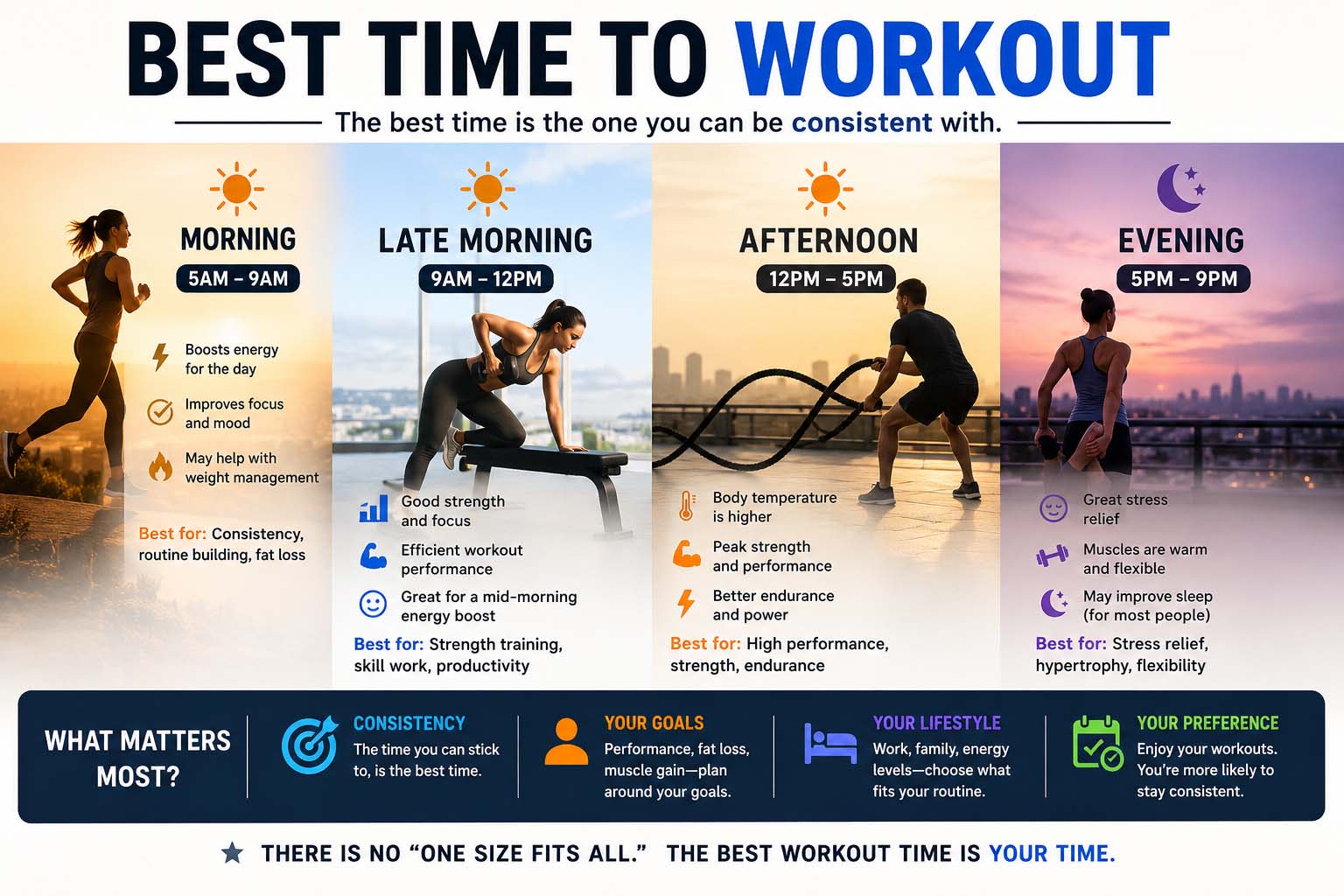
The best time of day to workout varies from person to person. However, different periods of the day offer specific advantages.
Morning Workouts
Morning exercise is popular among people with busy schedules.
Benefits of morning workouts include:
- Improved consistency
- Better focus throughout the day
- Increased metabolism
- Healthier daily habits
- Reduced schedule interruptions
Morning workouts may also help some people sleep better at night.
In fact, exercising early can create a sense of accomplishment before the day begins.
Afternoon Workouts
Many people experience peak physical performance during the afternoon.
Benefits include:
- Higher body temperature
- Better muscle flexibility
- Improved endurance
- Increased strength
- Lower injury risk
Afternoon workouts may feel easier because the body is fully awake and fueled.
Evening Workouts
Evening exercise works well for people who feel tired in the morning.
Benefits include:
- Stress relief after work
- Stronger performance levels
- Better muscle activation
- More available free time
However, very intense late-night workouts may affect sleep quality for some individuals.
Ultimately, the best approach is choosing a consistent workout time that fits your lifestyle.
When Is the Best Time to Workout for Weight Loss?
Many fitness beginners ask, “when is the best time to workout to lose weight?”
Research suggests that both morning and evening workouts can support weight loss when combined with healthy nutrition and consistency.
However, some studies indicate that morning workouts may provide additional fat-burning benefits because the body has lower stored energy after overnight fasting.
Morning exercise may help:
- Boost metabolism early
- Reduce appetite for some people
- Encourage healthier daily habits
- Increase daily activity levels
That said, the most important factor for weight loss is regular exercise rather than perfect timing.
In fact, a consistent routine matters more than whether workouts happen at 6 AM or 6 PM.
Additionally, understanding the best time to weigh yourself may help you monitor progress more consistently.
Best Time to Workout for Weight Loss
The depends on your ability to stay consistent long term.
Morning Weight Loss Training
Morning cardio and fasted exercise are popular among people focused on fat loss.
Common morning workouts include:
- Walking
- Jogging
- Cycling
- HIIT sessions
- Light strength training
Evening Weight Loss Training
Evening workouts may allow people to train harder because muscles are warmer and energy levels are higher.
This can help increase calorie burn during strength training or high-intensity sessions.
Overall, both approaches can support weight management when combined with proper nutrition and sleep.
Benefits of Working Out Regularly
Regular exercise improves much more than physical appearance.
Improved Heart Health
Better Mental Health
Workouts help reduce stress, anxiety, and depression symptoms.
Increased Energy Levels
Physical activity improves stamina and overall daily energy.
Stronger Muscles and Bones
Strength training helps maintain muscle mass and bone density.
For example, learning about the benefits of deadlifts may help you explore one compound strength-training exercise.
Likewise, exploring the benefits of a weighted vest may help you consider another way to add resistance to some activities.
Better Sleep
Many people experience improved sleep quality with regular exercise.
Ultimately, these long-term health benefits matter more than finding a “perfect” workout hour.
Signs You May Be Working Out at the Wrong Time
Some people struggle with exercise because their workout timing does not match their body’s needs.
Common signs include:
- Constant fatigue during workouts
- Poor performance
- Trouble sleeping
- Lack of motivation
- Frequent skipped workouts
- Extended muscle soreness
If exercise consistently feels exhausting, changing workout timing may help improve results.
Therefore, listening to your body is important for long-term fitness success.
Morning vs Evening Workout Comparison
| Morning Workouts | Evening Workouts |
|---|---|
| Better routine consistency | Higher strength performance |
| Boosts daily energy | Better muscle flexibility |
| Supports healthy habits | Stress relief after work |
| Good for early schedules | More social gym hours |
| May support fat burning | Stronger endurance |
Both options offer valuable health benefits.
The best choice depends on your schedule, preferences, and fitness goals.
Exercise Tips for Better Results
Stay Consistent
A regular routine matters more than perfect timing.
Warm Up Properly
Dynamic stretching helps prepare muscles before exercise.
Hydrate Throughout the Day
Proper hydration improves energy and recovery.
Eat Balanced Meals
Nutrition supports workout performance and muscle repair.
Similarly, choosing the best protein powder may help you match a supplement to your dietary needs and fitness goals.
Prioritize Recovery
Rest days help prevent injuries and overtraining.
Overall, healthy fitness habits improve long-term results regardless of workout time.
Best Workouts for Different Times of Day
Morning Exercises
Morning workouts often work best for:
- Walking
- Jogging
- Yoga
- Light cardio
- Stretching
Afternoon Exercises
Afternoon sessions are excellent for:
- Weightlifting
- HIIT
- Competitive sports
- Intense cardio
Evening Exercises
Evening workouts may include:
- Strength training
- Group fitness classes
- Cycling
- Swimming
Therefore, choosing suitable exercises for your energy levels can improve motivation.
Common Workout Mistakes to Avoid
Exercising Without Sleep
Lack of sleep reduces performance and recovery.
Skipping Warm-Ups
Cold muscles increase injury risk.
Overtraining
Too much exercise without recovery may harm progress.
Ignoring Nutrition
Poor nutrition limits workout results.
Comparing Yourself to Others
Fitness progress varies between individuals.
Ultimately, avoiding these mistakes helps create a healthier and more sustainable fitness routine.
How to Find Your Ideal Workout Time
Finding the best workout time requires experimentation.
Step 1: Test Different Times
Try morning, afternoon, and evening sessions.
Step 2: Monitor Energy Levels
Notice when you feel strongest and most motivated.
Step 3: Track Consistency
Choose the time you can realistically maintain.
Step 4: Evaluate Sleep Quality
Avoid workout schedules that disrupt rest.
Step 5: Adjust Gradually
Small changes often work better than dramatic routine shifts.
Overall, personal preference plays a major role in long-term fitness success.
FAQ About the Best Time to Workout
What Is the Best Time to Workout?
The best time to workout is whenever you can stay consistent and maintain good performance and recovery.
Best Time of Day to Workout for Beginners?
Morning or afternoon workouts often work well for beginners because they support routine building and energy management.
When Is the Best Time to Workout to Lose Weight?
Morning workouts may slightly support fat burning, but overall consistency matters most for weight loss.
Best Time to Workout for Weight Loss?
The best workout time for weight loss is the time you can follow regularly while maintaining healthy eating habits.
Is It Bad to Workout at Night?
Night workouts are generally safe, but very intense late-night sessions may affect sleep for some people.
Are Morning Workouts Better Than Evening Workouts?
Morning workouts help with routine consistency, while evening workouts may improve strength and performance.
Conclusion
Understanding the best time to workout can help improve motivation, performance, and long-term fitness success. While morning workouts may support consistency and fat burning, afternoon and evening exercise often improve strength and endurance.